
How to Choose Materials for Tactile Indicator Studs
304, 316/316L and brass compared, plus fixing method and substrate.
How to choose the material for tactile indicator studs
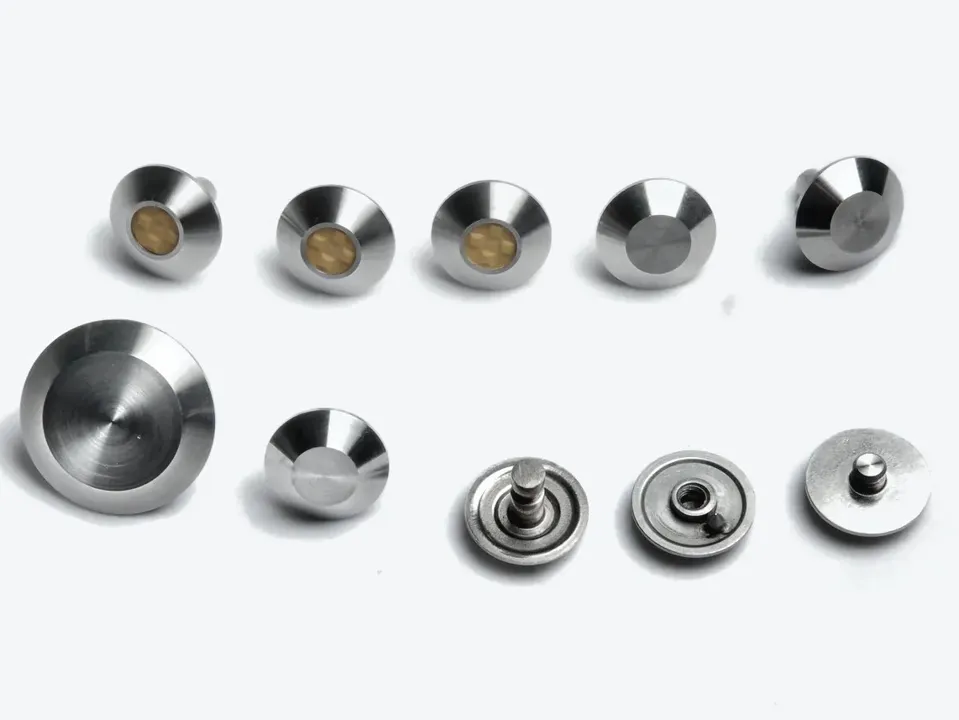
304 stainless steel (AISI 304)
Pros: Good corrosion resistance, moderate cost and a clean appearance.
Suitable for: Indoor public buildings and ordinary outdoor walkways.
Note: Pitting may occur after long exposure to salt spray, or in coastal or chloride-containing environments.
316 / 316L stainless steel (AISI 316 / 316L)
Pros: Contains molybdenum and usually resists chloride-induced pitting better.
Suitable for: Coastal areas, damp outdoor locations, salt spray and sites with a higher corrosion risk.
Note: Usually more expensive, and it cannot guarantee freedom from rust in every marine environment.
Brass
Pros: A striking appearance that easily creates metallic colour contrast.
Suitable for: Decorative indoor public spaces and specific floor designs.
Note: Wear, surface discoloration and suitability for outdoor use need to be assessed.
Fixing method and substrate
- Embedded, mechanical fixing or a suitable adhesive system can be used.
- Outdoors, assess the risk of loosening, standing water, temperature changes and substrate cracking.
- Check not only the stud material but also the durability of the threaded stem, base and adhesive.
Material recommendation: in ordinary environments, evaluate 304 stainless steel first; in salt-spray, coastal or higher-corrosion environments, evaluate 316/316L first. Where a project has a specific accessibility code, the materials and test requirements specified for the project take precedence.