
Rivet Types and Selection Guide
Six common rivet types compared, with five factors for choosing the right one.
Rivets are widely used permanent fasteners. Riveting joins two or more parts into a secure connection, and rivets are used across the automotive, electronic equipment, home appliance, sheet-metal fabrication, construction and machinery industries.
Choosing the right rivet means weighing joint strength, material thickness, installation space, riveting method, service environment and cost.
1. Common rivet types
1. Solid rivets
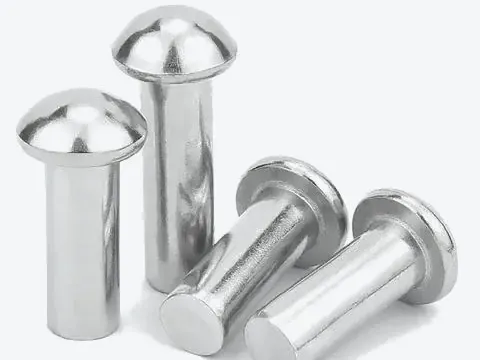
Structure: The shank is completely solid.
Characteristics: Suited to reliable load-bearing joints; usually requires access from both sides.
Applications: Aircraft structures, heavy machinery, metal structural parts.
2. Semi-tubular rivets
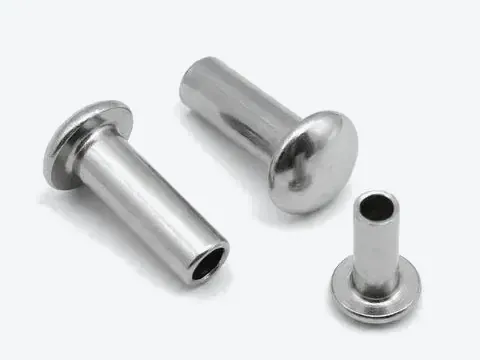
Structure: The end of the shank has a hollow hole.
Characteristics: The tail flares easily when riveted, with a low installation force.
Applications: Hinges, hardware fittings, home appliances and mechanical assemblies.
3. Tubular rivets
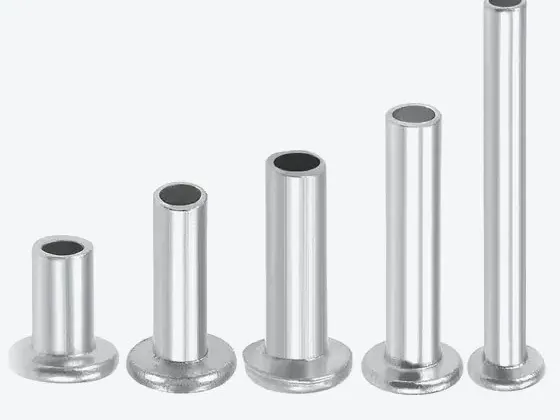
Structure: The shank has a deep hollow bore.
Characteristics: Light weight and low installation force.
Applications: Leather, textiles, nameplates and light assemblies.
4. Blind rivets (pop rivets)
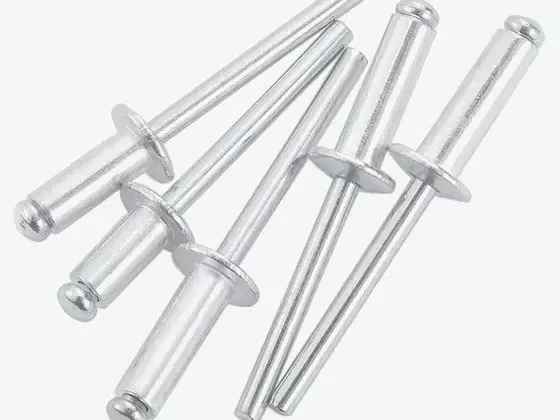
Structure: A rivet body fitted with a mandrel.
Characteristics: Can be installed from one side of the workpiece.
Applications: Sheet metal, enclosures, ventilation ducts and equipment housings.
5. Structural blind rivets
Structure: Blind rivets designed for higher load requirements.
Characteristics: Some types offer higher tensile and shear capacity and a reliable mandrel-locking design.
Applications: Commercial vehicles, construction equipment, heavy sheet-metal structures.
6. Rivet nuts
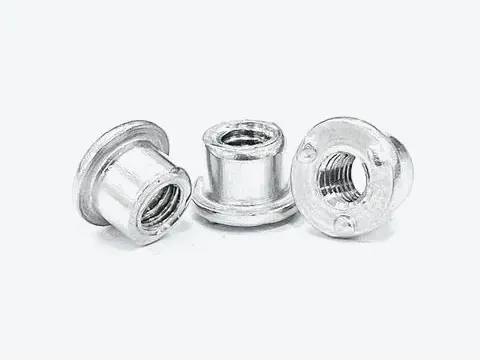
Structure: Fixed in place by pull-riveting, providing an internal thread.
Characteristics: Creates a threaded connection in thin sheet, so bolts can be fitted and removed later.
Applications: Automotive sheet metal, cabinets, equipment panels and thin-walled profiles.
2. Comparing rivet types
| Rivet type | Joint strength (general trend) | Installation | Typical applications |
|---|---|---|---|
| Solid rivet | High | Usually needs access from both sides | Load-bearing structures |
| Semi-tubular rivet | Medium to high | Tail forms easily | Machinery, hardware |
| Tubular rivet | Mainly light loads | Low installation force | Leather, electronic accessories |
| Blind rivet | Depends on type | One-sided installation | Sheet metal, enclosures |
| Structural blind rivet | For higher load requirements | One-sided installation | Construction equipment, vehicles |
| Rivet nut | Depends on size and base material | Provides an internal thread | Bolted joints in thin sheet |
Note: joint strength cannot be judged from the rivet type alone; refer to the tensile, shear and base-material load data for the specific model.
3. Five key factors in rivet selection
1. Joint strength
For high-load structures, evaluate solid rivets or structural blind rivets first; for light-load joints, semi-tubular or tubular rivets can be considered.
2. Material thickness
Choose the rivet length, diameter and grip range to suit the total thickness of the workpiece.
3. Installation method
Where both sides are accessible, solid rivets can be considered; where only one side is accessible, blind rivets or rivet nuts are usually chosen.
4. Material and corrosion resistance
Aluminium suits lightweight applications; carbon steel suits many general joints; 304 stainless steel suits general corrosive environments; 316 stainless steel is better suited where the risk of chloride and salt-spray corrosion is higher.
5. Production efficiency and cost
For high-volume production, consider riveting equipment, tooling cost, installation cycle time and quality consistency together.
4. Quick selection guide
High-strength permanent joints: solid rivets.
Machine parts and hardware assemblies: semi-tubular rivets.
Light loads, thin materials and decorative fixing: tubular rivets.
One-sided sheet-metal joints: blind rivets.
High-load one-sided joints: structural blind rivets with verified load data.
Bolts to be fitted and removed later: rivet nuts.
Summary: first establish the joint strength and installation conditions, then choose the rivet design, material, diameter and length. For critical structures, verify the choice with product technical data and actual joint tests.